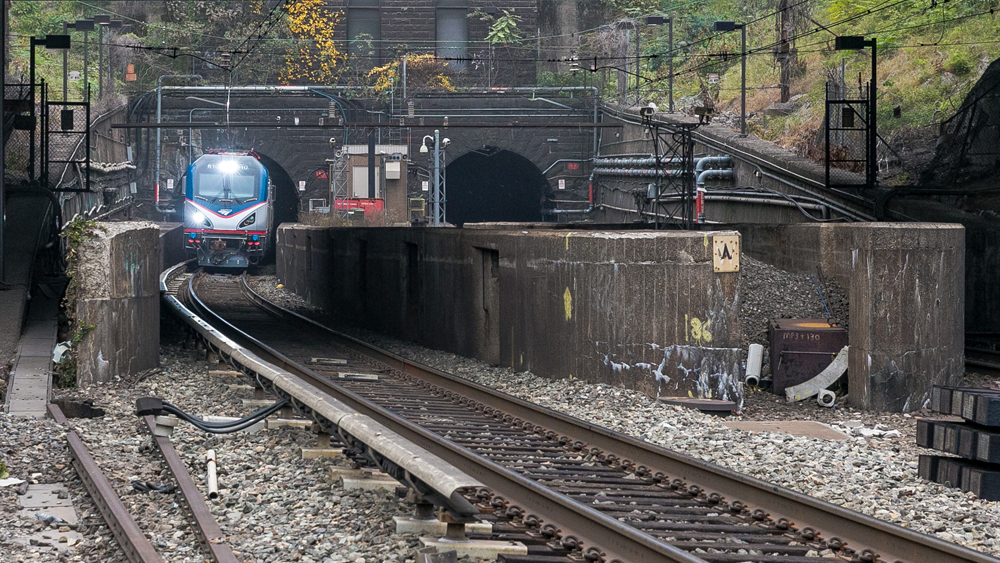
Anyone who has traveled by train along the Northeast Corridor has probably noticed how old all the trains, tracks, bridges, tunnels, and stations are along this major railway. Some people are even lucky enough to get stuck for multiple hours only 10 minutes outside of New York City. However, while it is pretty clear that there are some serious issues along this vital American railway, the issues are much deeper than one would think.
To start dissecting the problems along the Northeast Corridor, We need to know what the it is. According to Railway-Technolgy.com, “The Northeast Corridor (NEC) is a 457-mile (735.5km) railway line connecting highly urbanized areas in the US. It is the busiest railroad in North America, stretching from the north to the south and passing through eight states. It starts from Boston, Massachusetts, and ends at Washington, DC, via New York, and linking several intermediate cities to the District of Columbia.“ The website also states that “The NEC was built between 1830 and 1917, with electrification taking place between 1905 and 1938.” Nowadays, the northeast corridor is operated and maintained by The National Railroad Passenger Corporation, more commonly known as Amtrak.

Since Amtrak gained control of the NEC in 1976, there has been a large number of upgrades and renovations to make the trains faster, safer, and more economically friendly. However, while Amtrak continues to make improvements in the speed and efficiency of the trains, they largely have neglected doing major improvements to the actual infrastructure of the railway. Additionally, due to the increased demand, Amtrak has been struggling to keep up with the number of passengers using the NEC, and that has led to more and more delays and wear on the railway, something that is causing a major issue that becomes noticeable to any passenger.
One of the worst sections of the NEC is the Baltimore & Potomac (B&P) Tunnel Replacement project. The B&P tunnel is nearly 150 years old and dates back to the Civil War. According to the official Amtrak site, there are a variety of major issues with this tunnel such as “excessive water infiltration, a deteriorating structure, and a sinking floor.” As well as “no fire and life safety systems to help keep passengers safe in the event of an emergency, and excessive costly maintenance is required.” Amtrak also says that this Civil War era tunnel is “at capacity, and the tunnel’s tight curvature requires trains to reduce speeds to 30 mph. These issues create chronic delays — more than 10% of weekday trains are delayed, and delays occur on 99% of weekdays.”

John Marciari, who just so happens to be my father, is someone who has ridden the Amtrak train from Penn Station in Baltimore to the New Moynihan Train Hall in New York City, every Monday morning for the past 8 years. I asked a few questions about his thoughts and experiences with this vital train line. To start, I asked him about just his general thoughts on the Northeast Corridor. To start he said “it is rare that a train is not at least a few minutes late, and delays of 20-30 minutes are common. A few times per year, there is something worse that inevitably happens, such as when a few weeks ago, all trains between Philadelphia and New York were stopped, and I had to find a bus.” He thinks that the main problem here is that “There are also many fewer trains per day than there used to be, even though the trains are now almost always completely full. My sense is that Amtrak is barely getting by — they are underfunded and understaffed. The trains and especially the rail lines are clearly in need of repair. Additionally, while the new Moynihan station is a huge improvement in NYC, and Union Station in DC is nice, most of the stations are pretty minimal and old.”

All in all, while there have been some improvements along the Northeast Corridor, there are still many places that require maintenance. These are places such as the Baltimore Potomac tunnel, and the various stations along the line. With these improvements, the trains running along this vital railway will become faster and more efficient.
 MOOSE PRINTS