
In the spring and summer of 2021, the Audubon Society reported a mysterious disease spread throughout most of D.C., Virginia, West Virginia, Kentucky, and Maryland along with several other states. This disease didn’t affect us humans; we already had a pandemic to take care of. This disease affected the birds.
A Smithsonian article tells us that the first known case of this disease was in late June, where a woman found a bird with crusted grey eyes, was unresponsive, and shaking. Birds were found with neurological issues, looking almost zombie-like, their eyes being so messed up that they were blind. This was only seen in songbirds, with the disease not present in any vultures, hawks, or sea birds. The same article stated deaths of small songbirds were skyrocketing, much more than usual for the average spring. Songbirds are crucial to the environment and ecosystem. They spread seeds, eat bugs, or are prey for larger birds.

Blue Jay infected with mystery disease found in TheBayNet.com
One of the most intriguing things about this outbreak is that it came out of nowhere. The same Smithsonian article tells us that there has only been one disease similar to this which was a bacterial outbreak in finches in the 1990s. The finches also experienced crusted eyes but didn’t have any neurological issues. This disease also only affected finches and was over twenty years ago. These reasons make the finch disease most likely not the source for the illness present in 2021.
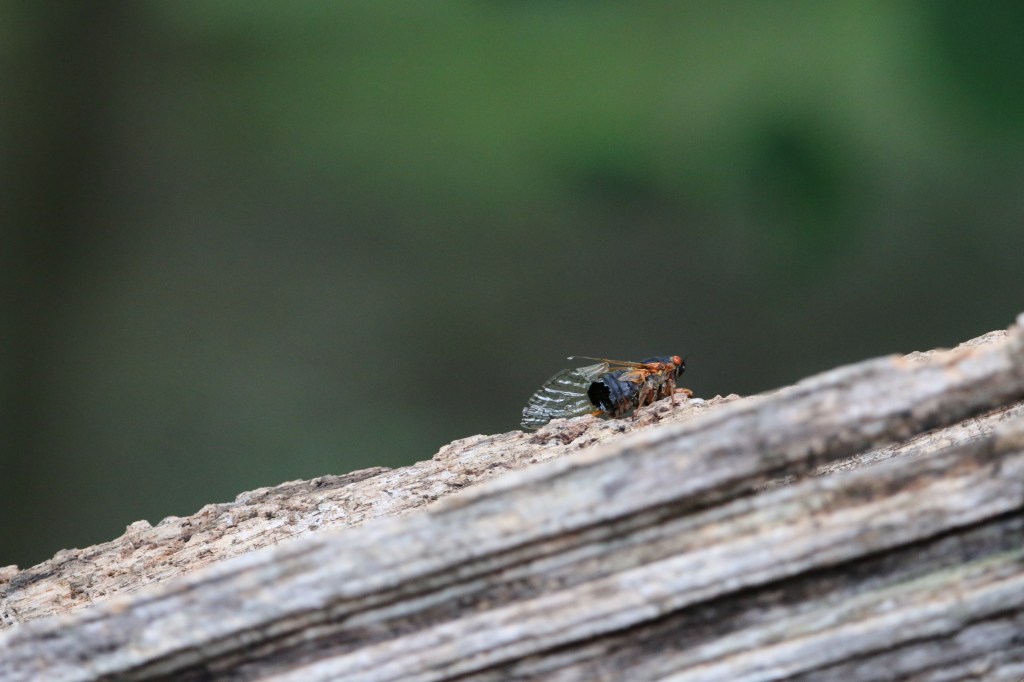
This spring and summer were different for another reason: the appearance of the Brood-X cicadas. These cicadas only come every seventeen years and are a plausible cause for this weird disease. The cicadas also can contract a fungal infection which causes them to lose their abdomen but still survive in a constant, sickly state, reported the Audubon Society. Except this fungal infection isn’t new and has been affecting cicadas for years. This means the birds were most likely not infected by the fungus.
“The temporal and spatial overlap between the cicadas and the disease certainly lends itself to the suspicion that there was a connection between the emergence of the cicadas and the disease,” John McKitterick, President of the Maryland Ornithological Society, stated. “However, the correlation between the disease and the cicadas was not perfect. The disease appeared a bit before the general emergence of the cicadas, and there were reports of the disease in areas where the cicadas were few. Nonetheless, the possible link between the cicadas and the disease remains, to me, the most likely explanation of the disease.”
With the more common use of pesticides, another theory is that the cicadas absorbed the chemicals and in turn made the birds sick. Cicadas eat the nutrients from tree roots, and if the plant absorbs the chemicals along with rainfall soaking it into the soil Beth Czerwony (a dietician) stated in an interview with the Cleveland Clinic. This is definitely a possibility for the cause of the disease.

Wildlife departments quickly announced that people should temporarily take down their bird feeders, to minimize spread to save more lives of birds. McKitterick goes on to say “All that we could do was to follow the real scientists and their recommendations. When it was suggested that bird feeding be halted, we spread that word around.” It was also announced that if you found any dead bird that showed the symptoms to send them to your Department of Natural Resources.
Other various diseases and pesticides can be detrimental to bird populations. McKitterick states “We can do something about diseases that are transmitted from bird to bird, by reducing the possibility of that transmission. In our own backyards, keeping our bird feeders clean is one step that we can take. Another is to stop feeding the birds if there is an outbreak of disease. Essentially, we need to enforce social distancing for the birds!”
While this mysterious disease is now gone “The real test will be next spring when we can see if young birds are affected again by the disease.” While this plague has now ended, other diseases and chemicals can affect the birds, killing hundreds without anyone knowing. Overall, birds need to be protected to further the survival of our local echo systems, and being aware of diseases like this one can help determine the next best action to help our feathered friends.
https://www.audubon.org/news/scientists-still-searching-pathogen-behind-easts-songbird-epidemic
 MOOSE PRINTS
are there any other theories to the disease? interesting article.
LikeLike